
How to Read and Act on Pedestrian Footfall Data for Retail Site Selection
Footfall data only creates value when you know how to interpret it. Learn the 4 key metrics, common Hong Kong-specific traps, and the decision framework seasoned retailers use.
Why Footfall Data Is the Most Misused Metric in Hong Kong Retail
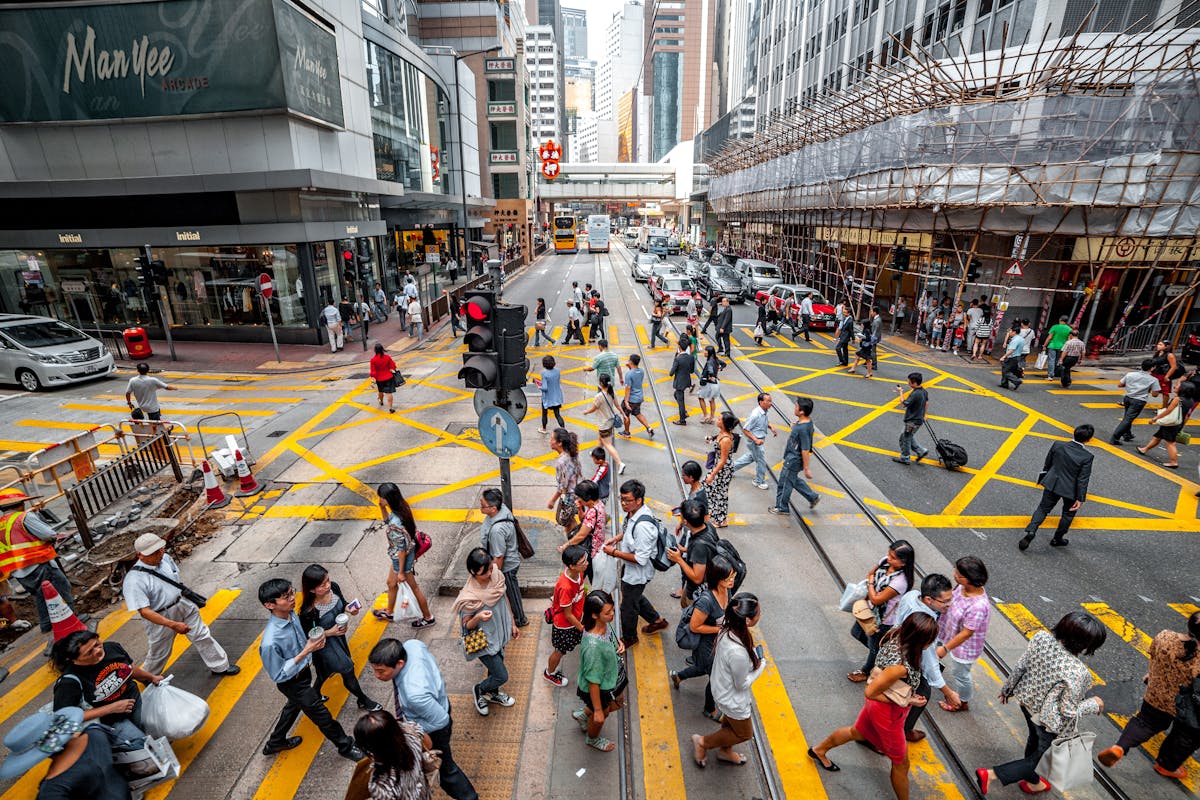
Ask any property agent in Hong Kong to justify a premium rent, and the first number they will cite is pedestrian footfall. A corridor with 80,000 daily passersby. A station exit with 120,000 commuters. A mall entrance with 40,000 weekend visitors.
These numbers are real. They are also, without further analysis, almost meaningless for F&B site selection Hong Kong or retail site evaluation purposes.
High pedestrian volume is a necessary but insufficient condition for retail success. A street can have enormous foot traffic and still be commercially hostile to your concept. The failure to understand why is responsible for more poor location decisions in Hong Kong than any other single factor.
This guide explains what footfall data actually tells you, what it does not tell you, and how to build a decision framework that turns raw pedestrian counts into genuine Hong Kong retail location intelligence.
The Four Footfall Metrics That Matter
Metric 1: Absolute Count
The total daily or hourly pedestrian volume passing a specific point. This is the number agents quote, property listings feature, and operators anchor on.
Absolute count is useful as a starting baseline and for eliminating obviously insufficient locations. A QSR on a street with 200 daily pedestrians cannot sustain a business. But once a location passes the minimum threshold for your format, the absolute count tells you surprisingly little about commercial viability.
Metric 2: Dwell Time
The average time pedestrians spend in a defined zone or street segment. This is the measure that separates transit corridors from retail opportunities.
High dwell time indicates browsing behaviour: pedestrians are slowing down, window shopping, making decisions about where to spend time and money. Low dwell time indicates purposeful transit: pedestrians have a destination and are moving toward it.
A location with 50,000 daily pedestrians where most are moving purposefully through is a transit corridor. A location with 20,000 pedestrians who regularly pause, browse, and linger is a genuine retail and dining destination.
For sit-down dining, café, and discovery-dependent retail concepts, average dwell time is more predictive of commercial performance than absolute count. Operators can assess this directly through structured observation visits at different times of day.
Metric 3: Temporal Distribution
How pedestrian volume is distributed across time — hours of the day, days of the week, months of the year.
Temporal distribution reveals the nature of the traffic and its compatibility with your operating model:
- Traffic peaking sharply between 7:30–9:30am and 5:30–7:30pm indicates commuter-dominant footfall
- Traffic distributed relatively evenly from 10am to 9pm indicates a leisure, shopping, or mixed-use profile
- Traffic heavily concentrated on Saturday and Sunday indicates tourism or leisure dependence with weekday vulnerability
- Absolute count: extremely high (among HK's highest)
- Observed dwell time: low on main thoroughfares (transit corridor behaviour), higher in side streets and malls
- Temporal distribution: strong 7 days but with pronounced tourist-driven weekend spikes
- Catchment overlap: high (same commuters plus regular visitors)
- Competition density: extreme across most F&B categories
- Rent: premium (reflecting footfall reputation, not necessarily commercial performance)
- Visiting Site A on a peak Saturday and Site B on a quiet Tuesday
- Using footfall counts from different seasons without normalisation
- Comparing absolute counts without adjusting for dwell time or demographic alignment
For F&B operators, the weekday-to-weekend ratio and the lunch-to-dinner ratio are particularly critical. A location with excellent weekend lunch traffic but minimal weekday coverage will produce 2.5 trading days worth of revenue from a 7-day cost structure.
Metric 4: Repeat vs. Unique Footfall
The degree to which the pedestrian volume at a location represents unique individuals rather than the same people passing multiple times.
This is one of the least-cited but most practically important footfall dimensions. A retail corridor may record 40,000 daily pedestrians — but if a large share are commuters passing the same location twice a day on their route to and from the MTR, the effective unique daily audience is considerably smaller.
High repeat footfall creates familiarity but limits addressable audience growth. A food operator relying primarily on the same commuters passing twice daily is essentially a subscription business with a ceiling on how many new customers it can acquire. Assessing repeat vs. unique traffic requires direct observation and local knowledge — it is not captured in a single pedestrian count.
The Mong Kok Paradox: Why Hong Kong's Highest-Traffic District Isn't Always the Best Choice
Mong Kok is Hong Kong's most cited example of extreme pedestrian density. The main thoroughfares through the district record some of the highest footfall measurements in Asia. For operators who equate foot traffic with commercial opportunity, Mong Kok appears to be the definitive answer.
The reality is more complex — and illustrates perfectly why raw footfall data requires careful interpretation in Hong Kong district analysis.
The Mong Kok footfall profile:
What this means for operators:
For mass-market QSR, bubble tea, and convenience formats targeting price-sensitive young consumers — Mong Kok can work, if the rent economics are manageable. The demographic alignment is strong for high-volume, low-margin models.
For premium dining, specialty coffee, or concepts that require browsing and discovery behaviour — Mong Kok is frequently a misallocation. The dominant traffic is not your customer, the competition is extreme, and the rent is priced off the headline footfall number rather than the actual addressable audience for your concept.
Operators who succeed in Mong Kok do so by understanding exactly which subset of the footfall they are targeting, not by assuming all 80,000 pedestrians are potential customers.
The Footfall Quality Assessment Framework
Applying the four metrics together produces a qualitative assessment of the actual commercial value of a location's pedestrian traffic, rather than its raw volume. Operators can use the following self-assessment framework to structure their own site observations.
| Assessment Factor | Low Quality | Medium Quality | High Quality |
|---|---|---|---|
| Absolute Count | Below minimum threshold | Adequate but not exceptional | Well above category minimum |
| Observed Dwell Time | Under 5 minutes typical | 5–15 minutes typical | Over 15 minutes typical |
| Temporal Distribution | Heavily peaked (one period) | Moderate distribution | Balanced across day/week |
| Repeat vs. Unique Traffic | Predominantly repeat commuters | Mixed unique and repeat | High unique daily visitors |
| Demographic Match | Low alignment with target customer | Partial alignment | Strong alignment |
A location rating well across all five factors is a strong footfall candidate for most formats. A location with very low observed dwell time or poor demographic match is a warning signal regardless of how impressive the absolute pedestrian count appears.
Common Traps in Hong Kong Footfall Interpretation
The MTR Exit Trap
Locations adjacent to MTR exits consistently record among the highest pedestrian counts in Hong Kong. Hundreds of thousands of commuters pass through major interchange stations daily.
But commuters moving at pace toward an exit have near-zero retail conversion rates. They have a destination; the shopfront they pass is peripheral to their journey. Premium transit-adjacent retail works only in formats specifically engineered for speed: convenience stores, grab-and-go QSR, ATMs, automated service kiosks.
For sit-down dining, cafés, or any concept requiring the customer to pause and make an active choice, MTR proximity is an overrated signal.
The Event Spike Trap
Some locations record substantially inflated footfall during specific periods: holiday events, seasonal festivals, one-off activations. An operator who surveys a location during the Lunar New Year shopping surge or a weekend market event will observe traffic that is structurally unrepresentative.
Always validate footfall across a full 12-month data cycle. Seasonal peaks are valuable information, but they should inform revenue seasonality planning, not the base-case site evaluation.
The Anchor Tenant Trap
A well-known anchor tenant — a major supermarket, cinema, or department store — generates significant footfall that may or may not be addressable for adjacent operators. Shoppers arriving specifically for an anchor tenant are often in a transactional mindset: in, buy the specific thing, out. They are less likely to browse, discover, or trial adjacent F&B or retail concepts.
The commercial value of anchor proximity is heavily format-dependent. A convenience-oriented grab-and-go benefits from anchor adjacency. A specialty dining concept may see high traffic volumes walk straight past.
Applying Footfall Intelligence for Franchise Multi-Site Evaluation
For franchise location analysis HK, footfall data takes on additional importance when evaluating multiple candidate sites simultaneously. The key discipline is consistency: all sites must be evaluated using the same metrics, at comparable time periods, using the same scoring framework.
Common franchise evaluation errors include:
AI-powered tools that provide standardised, comparable footfall quality assessments across all 18 Hong Kong districts eliminate these inconsistencies and allow genuinely apples-to-apples site comparisons.
Conclusion: Footfall Is a Starting Point, Not a Conclusion
The operators who consistently make good Hong Kong retail location decisions are not those who find the highest-footfall streets. They are those who ask better questions about the traffic they are evaluating.
Is this traffic addressable for my concept? Is it the right demographic? Does it have the dwell time my format requires? Is it distributed across the times I will be trading? Am I seeing unique visitors or the same commuters twice a day?
Footfall data, interpreted through a quality framework rather than a volume framework, is one of the most powerful inputs in restaurant location intelligence Hong Kong. Raw pedestrian counts, used in isolation, are one of the most reliable ways to overpay for the wrong location.
Ready to run a data-backed site evaluation for your next location?
Get your free PLACISE report in 5 minutes — no credit card required.
Get Your Free Report →